Naima: The Spiritual Ballad
Naima is John Coltrane’s hauntingly beautiful tribute to his first wife, a composition that stands as one of the most profound and spiritual ballads in the jazz history. Released on the iconic 1960 album 'Giant Steps,' it provides a necessary emotional contrast to the technical gymnastics of the title track. Its lush harmony, underpinned by persistent pedal points, creates an atmosphere of deep devotional love and quiet introspection. The description of the song often focuses on its 'languid' and 'floating' quality. Unlike standard ballads that rely on frequent ii-V-I resolutions, Naima utilizes static bass notes (pedal points) that anchor complex, shifting polychords. This creates a sense of harmonic 'suspension' that mirrors the feeling of a profound meditation or a quiet prayer. It is a piece that demands a high level of expressive control and tonal beauty from the performer. From a technical perspective, Naima is a masterclass in the use of pedal points and non-diatonic major harmony. It demonstrates how a composer can create a powerful emotional narrative using relatively simple melodic shapes supported by highly sophisticated harmonic textures. Describing Naima is about recognizing the moment when Coltrane’s music began to move away from the 'gymnastics' of bebop toward the more meditative and spiritual realms of his later masterpieces.
Introduction: A Tonal Landmark
Analyze the harmonic innovation and cultural impact of Naima. This composition serves as a foundational study in Pedal points and non-diatonic major harmony..
Historical Context
Coltrane composed Naima in 1959, and it quickly became one of his most beloved works. He reportedly considered it his favorite among his own compositions, and he continued to perform and record it throughout his career, often as a vehicle for his growing interests in modal and spiritual jazz. The original recording features the supportive and tasteful accompaniment of pianist Wynton Kelly, whose choice of voicings over the pedal points defined the song's signature sound. Historically, 'Naima' represents the 'softer' side of the hard bop and early modal eras. It showed that the same musician who could navigate the breakneck changes of 'Giant Steps' was also capable of creating works of immense lyrical beauty and emotional depth. This duality is a hallmark of Coltrane's genius and is one of the reasons his music continues to resonate so deeply with listeners across the world today. The song’s enduring legacy is evident in the hundreds of covers by artists ranging from McCoy Tyner to Esperanza Spalding. Each interpretation brings a new perspective to the tune, yet the core of 'Naima' remains constant—a profound statement of love and espiritual devotion. It is a piece that transcends its time and genre, serving as a permanent beacon of lyrical beauty in the modern jazz canon.
Interactive Soloing Laboratory
Use the buttons below to visualize key harmonic moments on the fretboard and circle of fifths.
Harmonic Deep-Dive
The harmonic foundation of Naima is built upon persistent pedal points, primarily on the tonic (Eb) and the dominant (Ab). Above these static bass notes, the harmony shifts through a series of non-diatonic major chords, creating a shimmering, polychordal texture. This 'pedal point' approach is what gives the song its unique sense of stability and mystery, as the traditional tension-and-release of functional jazz is replaced by a more atmospheric, modal movement. A key feature of the progression is the use of the bIImaj7/I and the IVmaj7/I polychords. These voicings create a rich, 'wide-open' sound that characterizes many of Coltrane's mid-period compositions. The bridge provides a brief harmonic departure, moving through a series of shifting modal centers before returning to the familiar pedal point of the A section. This structural contrast is essential for maintaining the song's meditative mood while providing enough harmonic variety to keep the listener engaged. For the analyst, Naima is an excellent study in horizontal harmonic movement. It demonstrates how different scales and modes can be layered over a single bass note to create complex and emotive colors. The 'quiet' tension of the pedal point is never fully resolved in a traditional sense; instead, it simply dissolves back into the tonic, leaving the listener with a feeling of profound peace. It is a masterclass in the intersection of modal jazz and traditional ballad form.
Abmaj7/Eb
Intervals: root, 3, 5, 7
Bb m7/Eb
Intervals: root, b3, 5, b7
E maj7/Eb
Intervals: root, 3, 5, 7
Eb7sus4
Intervals: root, 3, 5, b7
Recommended Resources for Naima
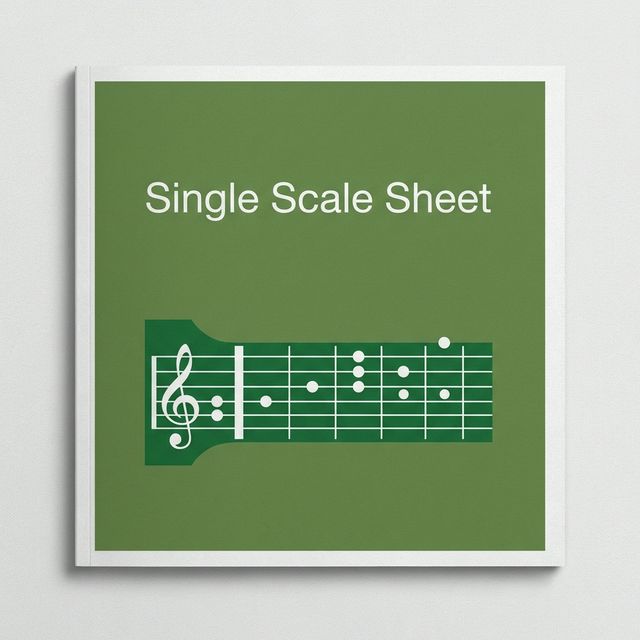
Sheet: E Ionian (Major)
$5
Sheet: E Dorian (Major)
$5
Sheet: E Phrygian (Major)
$5
Sheet: E Lydian (Major)
$5
Sheet: E Aeolian (Major)
$5
Sheet: E Locrian (Major)
$5
Sheet: E Blues major
$5
Melodic Analysis
The melody of Naima is characterized by its simplicity, lyricism, and use of long, sustained notes. It is designed to be played with a warm, 'breathy' tone, allowing the expressive qualities of the instrument to shine through. The phrases are slow and deliberate, mirroring the contemplative and devotional nature of the underlying harmony. The melody's contour is gentle and rising, reaching its peak just before the final cadence of each section. Melodically, the tune makes frequent use of the 7ths and 9ths of the chords, which are the most expressive intervals in the jazz vocabulary. By landing on these notes over the static pedal point, Coltrane creates a sense of quiet longing that is central to the song's emotional impact. The theme is more of a 'vocal' statement than a traditional jazz theme, demanding a high degree of melodic sensitivity and control from the performer. For the improviser, the melody provides a wealth of motivic material. By taking the simple, rising motifs of the theme and experimenting with their rhythm and interval size, a soloist can create a cohesive statement that stays true to the song's spiritual heart. The melody isn't just a theme; it is a masterclass in how to build a world-class ballad using simple, well-chosen intervals and a deep emotional commitment to the material.
Rhythmic Foundation
The rhythmic foundation of Naima is a slow, spacious ballad feel that emphasizes tone and atmosphere over a driving pulse. The drummer typically uses brushes, creating a shimmering, 'sandy' texture on the snare that complements the song's meditative mood. The pulse should be steady but flexible, allowing the soloist to play with the phrasing and tempo rubato to enhance the emotional impact of the performance. The bass's role is primarily to provide the static pedal points that anchor the harmony. This requires a high degree of rhythmic and dynamic stability, as any 'rushing' or 'dragging' of the pedal will dissipate the song's essential tranquility. The interaction between the bass and the piano’s polychordal voicings creates a dense but light rhythmic-harmonic carpet that the soloist can float above. Maintaining this sense of 'quiet' momentum throughout the duration of the song is one of the biggest challenges for a jazz ensemble. It requires a collective commitment to restraint and a deep understanding of the song's spiritual context. For any musician, mastering the 'Naima' groove is a vital step in learning how to play ballads with true depth and how to use the rhythm section as an atmospheric tool rather than just a clock.
Improvisation Strategies
Soloing over Naima requires a strategy that mirrors its meditative and spiritual heart. The most effective tool is the use of 'modal' phrasing over the pedal points. For the Eb pedal, try using the Eb major scale and its various modes to explore different harmonic colors. Focus on the 'color notes'—specifically the 7th and the 9th—to create phrases that sound sophisticated rather than just 'scalar.' In the bridge, follow the shifting modal centers and focus on smooth voice leading. Landing cleanly on the new tonic chord in each section is more important than playing fast runs. Using simpler, more 'vocal' phrases can help maintain the song's lyrical identity while navigating the more complex harmonic terrain of this section. Always keep the 'spiritual' context of the song in mind; your phrases should feel like an extension of the melody's devotional quality. Finally, use plenty of space and silence in your improvisation. By leaving room between your phrases, you allow the richness of the pedal point and the beauty of the polychords to shine through. Your goal is to tell a story that is as heartfelt and profound as the girl for whom the song was written. Naima isn't a tune for showcasing technical virtuosity; it’s a tune for those who want to create a deep, emotionally resonant musical statement. Be patient, be lyrical, and let the spiritual power of the song guide your choices.
Key Takeaways
The primary takeaway from Naima is the effective use of pedal points to create harmonic atmosphere and mystery. Learning how to phrase over a static bass note is an essential skill for any modern jazz musician. It expands your harmonic vocabulary and prepares you for more meditative and experimental modal works, teaching you the value of stability and restraint. Secondly, the tune is a masterclass in 'spiritual' ballad playing. It teaches you the importance of tone, phrasing, and emotional commitment in creating a profound musical statement. This lesson in lyricism is invaluable for any musician, as it helps you develop the emotional range needed to play across a variety of genres with true depth and sincerity. Finally, Naima serves as a reminder of the power of simplicity and the effectiveness of creating a cohesive musical 'world.' By tying the harmony, melody, and rhythm to a specific emotional concept, Coltrane created a work that is much more than the sum of its parts. It is a masterpiece of the genre that continues to inspire and challenge musicians to look beyond the notes and toward the deeper world of musical atmosphere, mood, and spirit.
© 2026 Sheets Media Academy. All Rights Reserved.