Pedals as Instruments: Ambient Soundscapes and Beyond
2024-02-29
9 min read
The Shift in Perspective
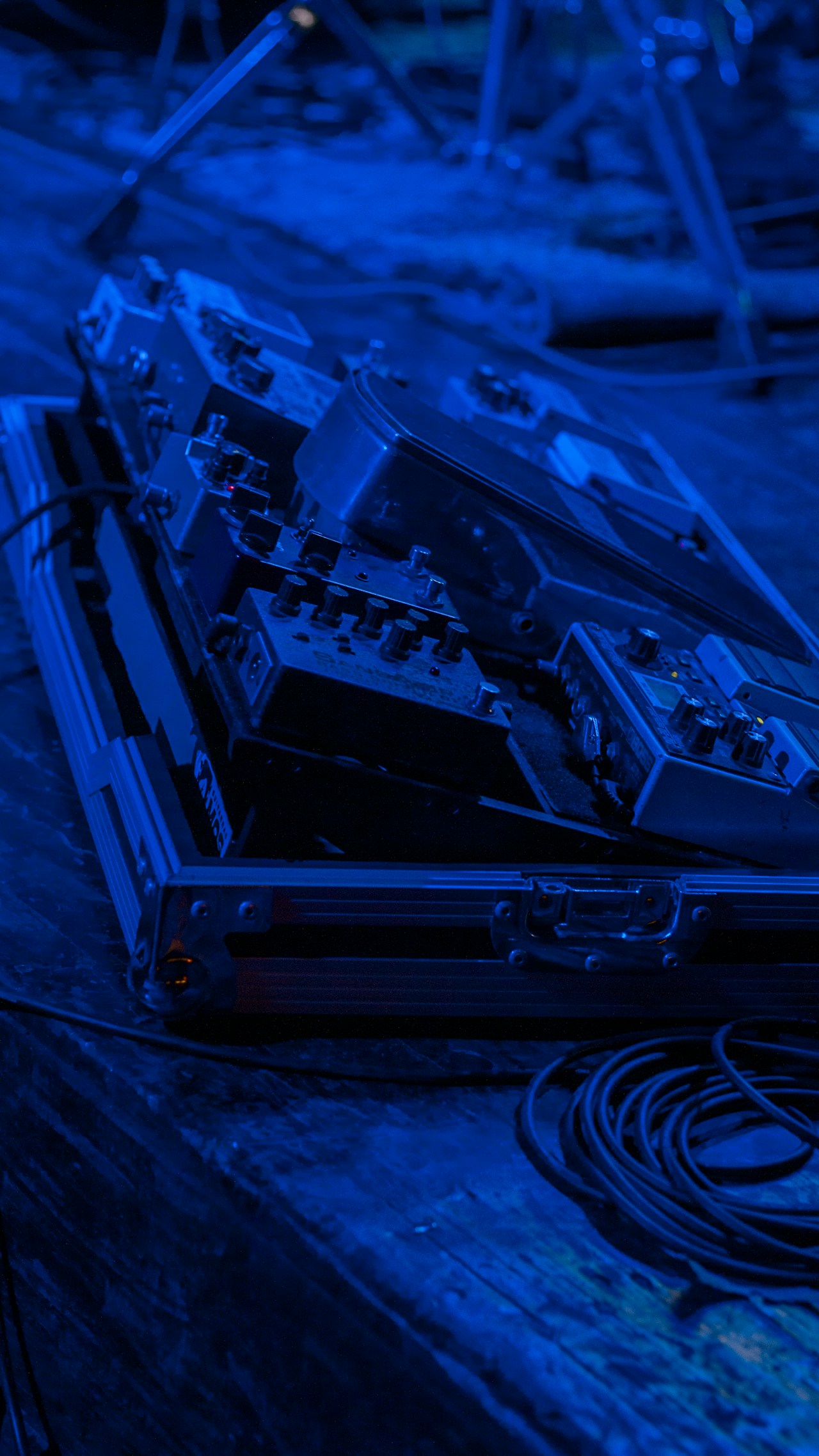
For decades, effect pedals were seen as secondary tools—a way to add a bit of 'flavor' or 'utility' to a guitar signal. You had your distortion for the heavy parts, your chorus for the 80s parts, and your wah for the solos. But in the modern age, a new philosophy has emerged: treating the pedalboard as an instrument in its own right. This approach, popular in post-rock, ambient, and electronic music, views the guitar as a 'raw oscillator' or signal source, while the pedals are used to shape, warp, and transform that signal into something entirely new. At Guitar Sheets, we celebrate this 'Sonic Alchemy' and provide the guides you need to master the art of pedalboard manipulation.
The Signal Chain as Composition
When you treat pedals as instruments, the order of your signal chain becomes a compositional decision. Putting a reverb *before* a distortion creates a massive, wall-of-sound texture where the 'wash' of the reverb is amplified and grit-added. Putting a delay *after* a pitch-shifter creates cascading, otherworldly melodies. We provide 'Signal Chain Blueprints' that show you how to architect your sound for specific emotional effects. It’s about understanding the 'physics' of your signal and learning how to manipulate it to create textures that a standard guitar setup could never achieve. Your pedalboard is not just a collection of boxes; it’s a modular synthesizer controlled by your feet and hands.
Oscillation and Feedback Loop Control
One of the most powerful (and dangerous) techniques in ambient pedal use is 'self-oscillation.' By turning up the feedback on a delay pedal or the resonance on a filter, you can cause the pedal to generate its own sound, independent of what you’re playing on the guitar. Learning to 'tame' this oscillation—controlling its pitch and volume with the knobs—is a high-level skill. At Guitar Sheets, we show you how to use these 'unstable' sounds to create dramatic crescendos and evolving drones. It requires a different kind of virtuosity, one focused on manual dexterity and a deep understanding of electronic feedback. You stop being just a guitarist and start being a 'pilot' of sound.
Ambient Texturing: Swells and Washes
The hallmark of the 'pedals-as-instruments' approach is the ambient wash. By combining long-decay reverbs with multi-tap delays and 'freeze' pedals, you can create a sound that feels more like a cathedral organ or a synthesizer pad than a guitar. We teach the 'Art of the Volume Swell'—using a volume pedal to remove the 'attack' of the pick, leaving only the blooming, sustained note. This technique allows you to create 'seamless' transitions and cinematic soundscapes that can fill a room. Our 'Ambient Modules' provide the harmonic and technical framework to help you navigate these vast, sonic spaces without losing your musical way. It's about painting with sound over large canvasses of time.
Expression Pedals and Real-Time Manipulation
To truly treat pedals as instruments, you need real-time control. This is where expression pedals come in. By connecting an expression pedal to your delay time, your reverb mix, or your filter cutoff, you can change the character of your sound as you play. This adds a level of 'expressiveness' and 'humanity' to digital effects that is otherwise missing. We provide tutorials on how to 'sequence' your movements, matching the sweep of your expression pedal to the dynamics of your playing. It turns your 'static' effects into 'dynamic' extensions of your performance. Your feet become as important as your fingers in the creation of the music. Control the flow.
Sustainable Pedal Usage: Minimalism and Quality
With thousands of pedals on the market, it’s easy to fall into the trap of 'G.A.S.' (Gear Acquisition Syndrome). However, the most effective ambient musicians often achieve the most with the least. We encourage a 'Minimalist-Virtual' approach—using a few high-quality, versatile pedals (or high-powered multi-effects) and learning them inside and out. We also address the 'sustainability' of your setup, from power management (avoiding the hum) to the ergonomics of your board layout. A well-organized, understood pedalboard is a creative joy; a messy, mysterious one is a technical nightmare. Master your tools, don't let them master you.
Conclusion: The Infinite Palette
Treating pedals as instruments is an invitation to explore the infinite palette of sound. It breaks down the barriers between musical genres and encourages a spirit of play and experimentation. At Guitar Sheets, we are proud to be your guide on this sonic adventure, providing the technical knowledge and the creative inspiration you need to build your own unique soundscapes. Whether you’re creating quiet, contemplative drones or massive, earth-shaking walls of noise, the journey will expand your understanding of what 'music' can be. The signal is yours to shape; the boxes are waiting. What worlds will you create today?
Guitar Sheets Editorial
Our editorial team is dedicated to providing high-quality music education and platform insights.
Keep Reading
The Psychology of Performance: Overcoming Stage Fright and Mental Blocks
Insights into the mental game of music and how to perform with confidence.
Heavy Metal Harmonies: The Science and Soul of the Power Chord
Go beyond the distortion and discover the sophisticated harmonic structures and classical influences that drive modern metal.